
Home Hobbies
Category:

Hobbies

Advertorial

It sounds like a contradiction: social media influencers telling you to get off social media. But across Canada, some of the country’s most popular online creators are doing exactly that. They are sharing their personal secrets for disconnecting — and their followers are listening.

The movement is called “digital detox.” It means taking intentional breaks from screens, notifications, and endless scrolling. And according to recent surveys, nearly two thirds of Canadians say they want to reduce their screen time this year.

Even influencers — people who make a living online — say they need breaks.

“I love my job,” says a Toronto‑based lifestyle creator with over 800,000 followers. “But last year, I realised I was checking my phone thirty times an hour. I could not finish a meal without filming it. I was exhausted.”

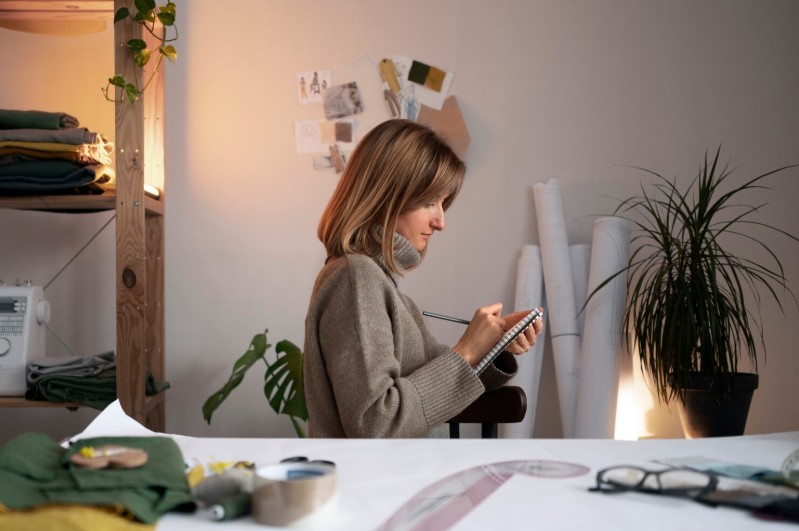
Her secret? She now designates two full days a week as “offline days.” No social media, no email, no news apps. Instead, she sews. She learned to make her own clothes, and those hours at the sewing machine have become her escape. She even posts about her finished projects — after the offline days are over.

Pages: 1 2

Advertorial

When most people think of video games, they imagine fast action, explosions, and competition. But a new kind of gaming is sweeping across Canada — quiet, gentle, and focused on feelings rather than winning.

It is called “mood‑based gaming.” These are online games designed to calm you down, not hype you up. They have no timers, no enemies, and no game‑over screens. Instead, you might explore a peaceful forest, arrange flowers in a virtual garden, or walk through a rainy city street listening to soft music.

The trend has exploded in 2026. According to a recent study of Canadian digital habits, more than half of casual gamers now prefer mood‑based or “slow” games over traditional competitive titles. The biggest fans are young adults and middle‑aged workers seeking stress relief after long days.

“I used to play shooting games,” says a receptionist in Calgary. “But they made me more tense, not less. Now I play this little game where I run a small coffee shop. I make virtual lattes, serve imaginary customers. It’s silly, but it makes me feel peaceful.”

Game developers have noticed. Major platforms like Steam and the Apple App Store now have dedicated categories for “cozy games” or “relaxing games.” Canadian indie developers are at the forefront, creating titles that celebrate slowness, kindness, and gentle exploration.

One popular Canadian‑made game lets players restore an abandoned lighthouse on a foggy island. You clean, paint, plant flowers, and watch the sunset. There is no score. No deadline. Just the quiet satisfaction of making something beautiful again.

Pages: 1 2

Advertorial

In a world of instant messages and emojis, writing a physical letter seems almost strange. Yet millions of Canadians are doing exactly that. They are finding pen pals — strangers or friends — and exchanging handwritten letters by mail.

The proof is in the search data. On Pinterest, the popular visual discovery platform, searches for “pen pals” jumped by 45 percent in 2026 compared to the previous year. Similar growth has been seen on other platforms, where young adults share photos of decorated envelopes, wax seals, and colourful stationery.

Why would anyone choose slow mail over fast text?

The answer, say enthusiasts, is that handwriting feels different. It is deliberate. It takes time. You cannot fire off a letter in two seconds. You have to sit down, think about your words, and commit them to paper. That thoughtfulness makes the message feel more meaningful.

“I have over a hundred unread texts on my phone,” says a university student in Montreal who started pen‑pal writing last year. “But when I get a letter, I stop everything. I make tea. I sit by the window. I read it slowly. Then I write back. It’s completely different.”

The pandemic played a role in reviving letter writing. Isolated and lonely, many people turned to old‑fashioned correspondence as a way to connect. What started as a temporary coping mechanism became a lasting habit.

Pages: 1 2

Advertorial

There is a quiet movement happening in Canada’s forests, parks, and even city ravines. More and more people are heading outside with baskets and guidebooks, looking for edible mushrooms, wild berries, and herbs.

It is called foraging — the ancient practice of gathering food from the wild. And it has become one of Canada’s fastest‑growing “hushed hobbies.”

The term “hushed hobbies” describes quiet, slow, nature‑based activities that feel almost secret. Unlike loud sports or crowded festivals, foraging is personal and peaceful. You walk slowly. You observe carefully. You listen to birds and the rustle of leaves.

Recent travel data shows that 58 percent of Canadians are interested in foraging or have already tried it. Many say they want to learn because they feel disconnected from where their food comes from. Others are drawn to the idea of free, healthy ingredients that cannot be found in a grocery store.

“I started foraging during the pandemic,” says a nurse from British Columbia. “I was stressed, anxious, stuck inside. A friend took me mushroom hunting in the forest. Within an hour, I forgot about everything else. I was just looking, smelling, touching. It saved my sanity.”

Foraging is not as simple as walking into the woods and picking whatever looks good. Mistakes can be dangerous — some mushrooms are poisonous. That is why beginners are urged to go with experienced guides, take classes, and use reliable field guides.

Pages: 1 2

Advertorial

For years, the word “hobby” meant scrolling through social media or binge‑watching shows. But something has shifted. Across Canada, millions of people are putting down their phones and picking up needles, thread, and clay.

Sewing and pottery have made a quiet but powerful comeback. They are now two of the country’s most popular “analog” hobbies — activities that do not involve screens, algorithms, or notifications.

So what is behind the return to thread and clay?

The answer, many say, is exhaustion. After years of remote work, video calls, and endless digital notifications, Canadians are craving something real. Something they can touch. Something that does not ping.

“I spend all day looking at a screen,” says a software developer in Ottawa who took up sewing during the long winter months. “When I sit at my sewing machine, I forget about emails. I just focus on the fabric, the stitch, the feel of it. It’s like meditation.”

Pottery studios across the country report waiting lists for beginner classes. In Toronto, one popular studio sells out its eight‑week wheel‑throwing course within hours of opening registration. In Vancouver, community kilns are booked months in advance. In Halifax, a collective of potters opened a new shared workspace last year and already has a hundred members.

Pages: 1 2

Advertorial

About Us

Dynamic-arcade Ltd. 

Rowan Delaney 

1 Eglinton Ave E Suite 801, Toronto, ON M4S 2B1,  Canada

Contact: +14169884575

E-Mail: info@dynamic-arcade.com

Disclamer

This website provides news and lifestyle content for Canadian readers for general informational purposes only. We do not guarantee the completeness, accuracy, or timeliness of any information. Nothing on this site constitutes professional legal, financial, or medical advice. Use of this site is at your own risk, and we are not liable for any losses arising from your reliance on our content.