Home Business
Category:

Business

Advertorial

Kat Palmer twirls her hair around her finger and looks up at the ceiling. She is stumbling over a question that, for most, would be a breeze to answer.

Sitting in her small Vancouver apartment, I asked Kat to tell me a little bit about her siblings.

Up until a few years ago she would have simply said: “I’m an only child.”  Her response now is mindboggling:

“So, my oldest brother that I know about is a lawyer.

And then James is a welder.

Rebecca works for Parliament.

One of my sisters has a good old government job in Ottawa.

Who else am I forgetting? One of my siblings makes documentaries.

Uh. There’s so many.”

The girl who grew up thinking she was an only child has discovered she has at least 10 siblings.

They all share the same biological father: a man named Dr. Norman Barwin. The once-revered Ottawa fertility guru is accused of helping each of their mothers get pregnant in the most horrifying way: by secretly using his own sperm, at least 11 times.

Kat and her half-siblings are part of an unprecedented class-action lawsuit that has grown to include an alarming number of alleged victims since it was first announced in 2016.

Along with the 11 so-called “Barwin Babies,” there are others who have recently discovered they were conceived, not with their father’s sperm, or with donor sperm that their parents selected, but with unknown donors.

They are left grappling with the fact they may never know who their biological fathers are. And then there are the heartbreaking cases of men who stored their samples with Dr. Barwin before becoming infertile from medical treatments like chemotherapy.

Some of those men went on to have children, only to find out now that their stored sperm samples weren’t used and that they have no biological link to their children.

There is also the sobering possibility that their samples may have been used to impregnate strangers.

In total, 50 people have now come forward to claim that they are a product of Dr. Barwin’s nightmarish “mix-ups.” There’s no telling how many more there may be, but the lawyers behind the class-action lawsuit are advising every single one of Dr. Barwin’s patients, over the last four decades, to get a DNA test to be certain of their genetic makeup.

Until his fall from grace, Dr. Norman Barwin was known in fertility circles as “The Baby God” — the man who worked magic to get his patients pregnant. A married father of four, he was a pillar of the Jewish and arts community in Ottawa, a philanthropist who was awarded the Order of Canada. He was born in South Africa and trained in Ireland.

Not surprisingly, Norman Barwin refused to meet me for an interview. So I went to his modest lakefront home in Ottawa.

He was standing outside on his driveway when I approached. He repeatedly said “No comment” when I asked him the one question that haunts so many of his former patients: “Why?”

But when you watch the W5 documentary, “The Barwin Babies,” you’ll see Norm Barwin did finally did mutter a response.  And it sounds alarmingly similar to how he dealt with questions that were raised years ago when another bizarre secret was exposed.

He is accused of cheating on marathons. Twice. Once in 2000 in Boston and then again the following year in Ottawa. Both times he skipped out part-way through the 42.2 km run and rejoined near the end, crossing with astoundingly good finish times.

When grilled about the cheating by CTV reporter Glen McGregor, who was working for the Ottawa Citizen at the time,  Barwin said: “I’m not quite sure what happened. I have had a hard time with this. It wasn’t my intent to do this. It’s really very embarrassing for me. It was quite out of character, I promise you.”
Advertorial

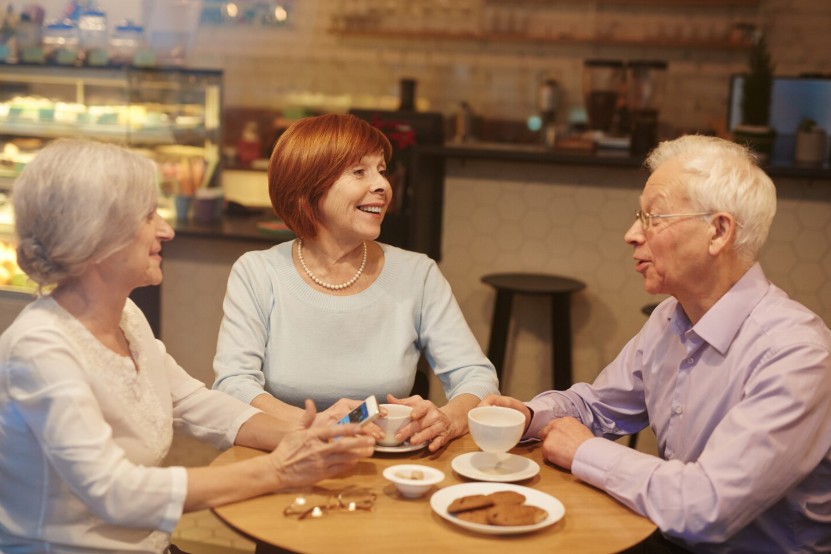
In a city of glass towers and fast-paced change, one small coffee shop in Toronto’s east end has become something rare: a gathering place that feels like family.

The “Morning Roast” opened in 2013, run by a couple named Ben and Carla. They made good coffee, served fresh muffins, and were friendly to everyone who walked in. But they never imagined their shop would become a lifeline for an entire neighbourhood.

The change began during the pandemic. When lockdowns hit, Ben and Carla could have closed their doors like many others. Instead, they transformed their café into a community hub.

“We started a ‘pay it forward’ board,” Carla explains. “Customers could buy an extra coffee or a sandwich, and we would write it on a chalkboard. Anyone who could not afford a meal could just take one. No questions asked.”

The board filled up quickly. Some days, there were fifty prepaid meals waiting. Neighbours who had never spoken before started conversations over takeout cups. People left notes of encouragement on a separate bulletin board.

When schools closed, Ben and Carla noticed children from the nearby apartment buildings standing outside, hungry. They started handing out free peanut butter sandwiches and bananas. Word spread. Local bakeries and groceries donated bread, fruit, and pastries. The coffee shop became an unofficial food distribution point.

Pages: 1 2

Advertorial

For ten years, Kofi Mensah worked six days a week at a busy hair salon in downtown Vancouver. He was good at his job — really good. His clients loved him. But he was tired of giving most of his earnings to the salon owner.

“I would cut hair for twelve hours and take home less than half of what clients paid,” Kofi says. “I dreamed of having my own chair, my own space.”

But rent in Vancouver is brutal. A small salon suite in a good location costs thousands of dollars a month. Kofi did not have savings. He had a young daughter and a mortgage.

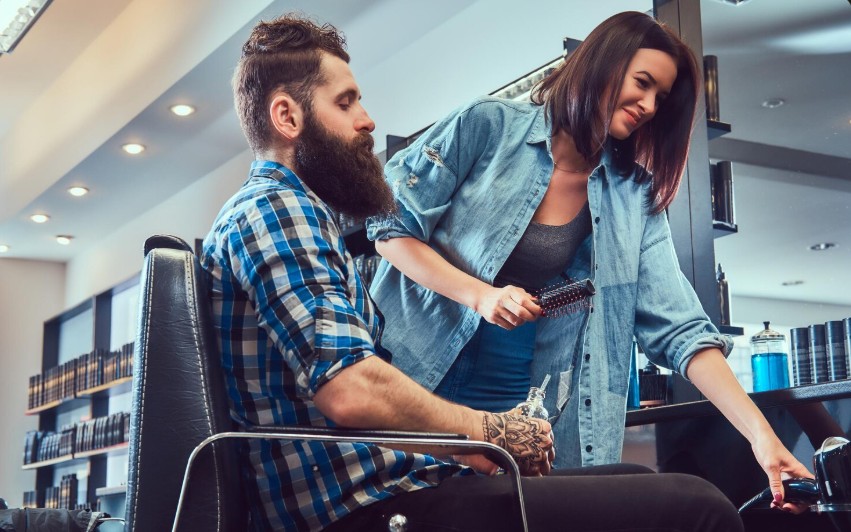
So he started small. He bought a portable barber kit — clippers, scissors, combs, a foldable mirror — and began cutting hair on weekends in his tiny apartment living room. He told only a few trusted clients. They told their friends. Soon, Kofi was fully booked every Saturday and Sunday.

“My wife would take our daughter to the park for four hours, and I would turn our living room into a barbershop,” he recalls. “We moved the coffee table, put down a sheet, and played loud music. It felt illegal, but it was just a side hustle.”

Word spread on Instagram. Kofi posted before-and-after photos of his fades, beard trims, and lineups. His style was clean but creative — he loved adding small designs shaved into the hair. Younger clients, especially, appreciated the attention to detail.

Pages: 1 2

Advertorial

The Turner family has farmed the same land in southern Alberta for four generations. But five years ago, the farm was dying. Prices for wheat and canola had fallen. The equipment was old. Debts were mounting. The bank was calling.

James Turner, now 67, was ready to give up. “I told my daughter, ‘Sell it. Sell everything. There’s no future here.’”

But his daughter, Emily, who had just finished university with a degree in environmental science, refused. “I grew up on this land,” Emily says. “I wasn’t going to watch it disappear.”

She convinced her father to give her one year to try something different. Instead of growing only wheat and canola, Emily proposed planting a mix of heritage grains, vegetables, and flowers. She wanted to sell directly to local restaurants, farmers’ markets, and families — cutting out the big grain elevators and volatile global prices.

James thought she was dreaming. But he had nothing to lose.

Pages: 1 2

Advertorial

In an age when most independent bookstores have given in to Amazon and e‑commerce, one small shop in Halifax is doing the opposite. And it is working.

The “Odd Volume” bookstore sits on a quiet side street in the city’s historic north end. It has creaky wooden floors, mismatched chairs, a cat named Dickens who sleeps on the counter, and absolutely no website for online shopping.

“People look at me like I have two heads when I say we don’t ship books,” says Susan MacLeod, the 58-year-old owner. “But that’s not what we’re about. We’re about the feeling of finding a book you weren’t looking for.”

Susan opened Odd Volume twelve years ago after losing her job as a librarian during budget cuts. She had no business experience, just a love of books and a small inheritance from her mother. She found a cheap rental space, painted the walls deep green, and filled the shelves with used and remaindered books.

For the first few years, she barely broke even. Then something unexpected happened. People started coming not just to buy books, but to stay.

Pages: 1 2

Advertorial

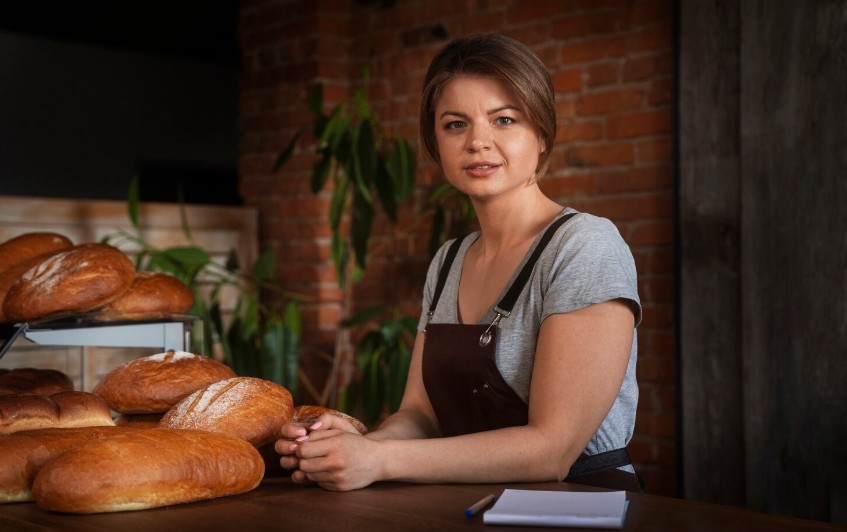
When Maria Santos arrived in Winnipeg from the Philippines eight years ago, she brought two things in her suitcase: a small notebook filled with family recipes and a dream of owning her own bakery.

She did not have money for a storefront. She did not have business partners or a marketing plan. What she had was a rented garage behind her apartment and a lot of determination.

“I started baking at three in the morning before my cleaning job,” Maria recalls with a laugh. “My neighbours thought I was crazy. They could smell pandesal and ube rolls at four AM.”

For the first year, Maria sold her bread and pastries to friends, co-workers, and anyone who knocked on her garage door. She used social media to post photos of her creations — golden brown loaves, colourful cupcakes, delicate cookies dusted with powdered sugar. Slowly, orders grew.

Pages: 1 2

Advertorial

About Us

Dynamic-arcade Ltd. 

Rowan Delaney 

1 Eglinton Ave E Suite 801, Toronto, ON M4S 2B1,  Canada

Contact: +14169884575

E-Mail: info@dynamic-arcade.com

Disclamer

This website provides news and lifestyle content for Canadian readers for general informational purposes only. We do not guarantee the completeness, accuracy, or timeliness of any information. Nothing on this site constitutes professional legal, financial, or medical advice. Use of this site is at your own risk, and we are not liable for any losses arising from your reliance on our content.